Home › Road, Street, and Municipal Paving
Keep traffic moving smoothly with professional road paving in Boise, ID. We provide asphalt construction and resurfacing for subdivision streets, municipal roads, and access routes. Our team manages grading, base work, paving, and traffic control to deliver durable roadways that stand up to heavy use.
Precision Asphalt Boise provides professional road paving throughout Boise, ID, ID and the surrounding area. Our licensed, insured crew delivers safe, clean, on-time work with a free estimate before anything begins. Call or request your free quote.
Road Paving for Boise Neighborhoods, Schools, and Business Districts
Boise drivers notice quickly when a road has been paved well. Smooth, safe streets are a big part of daily life here, from school drop‑off lines to farm‑to‑market routes and business access roads. Precision Asphalt Boise focuses specifically on road, street, and municipal paving that fits how Boise is actually used, from freeze‑thaw cycles in winter to summer heat and heavy traffic near busy commercial areas.
Our team works with cities, highway districts, HOAs, private developers, and individual property owners on projects that range from a few hundred feet of private road to full neighborhood street systems. We understand Ada County Highway District (ACHD) standards, local design preferences for residential streets, and the realities of working within Boise’s short prime paving season. When we recommend a pavement structure or schedule, it is based on local experience, not a generic template.
If you are planning a new road, a reconstruction of an aging street, or a pavement overlay on a private drive that functions like a public street, we can walk you through realistic options, timelines, and costs before you commit to engineering or permitting fees.
How Road and Street Paving Projects Typically Move Forward
A successful road paving job in Boise starts long before asphalt is placed. We begin with a site visit to walk the corridor, assess subgrade soils, check drainage patterns, and look at existing damage like rutting, alligator cracking, or edge failures. We combine that with traffic expectations, including garbage trucks, school buses, farm equipment, or delivery vehicles, to determine how strong the road structure needs to be.
From there, Precision Asphalt Boise coordinates with your engineer or, on smaller private roads, helps you define thicknesses and cross slopes that match common local standards. We verify right‑of‑way limits, drive access points, and any utilities that must be protected or adjusted. For projects that need ACHD or City of Boise review, we can align our construction approach with their typical details to avoid delays during inspection.
Before work begins, we provide a detailed schedule and traffic control plan. This includes how we will keep residents or customers moving, when lanes will close, and what access will look like overnight. On many neighborhood streets, we phase work so that one end of the street remains open or we provide temporary gravel access, which reduces frustration for local drivers and emergency services.
Step‑by‑Step: From Subgrade to Finished Asphalt Surface
On the ground, road paving follows a clear sequence so the final surface performs in Boise’s climate.
1) Subgrade preparation: We strip vegetation and unsuitable soils, then proof‑roll the roadbed with loaded trucks or compactors to locate soft spots. Weak areas are undercut and replaced with stronger imported material, often a local crushed aggregate mix that performs well in freeze‑thaw.
2) Base placement and compaction: For most neighborhood streets and access roads, we install a graded aggregate base to a thickness that matches the traffic and soil conditions. Each lift is compacted with vibratory rollers and checked for density. Proper base work is what keeps Boise roads from settling or developing dips after a few winters.
3) Fine grading and drainage shaping: We set cross slope, crown, and ditch grades so water moves away from the pavement. In Boise, where snowmelt and spring rain can come fast, standing water is one of the main causes of early pavement failure. We carefully match driveways, curb lines, and ADA ramps so water does not pond at low spots.
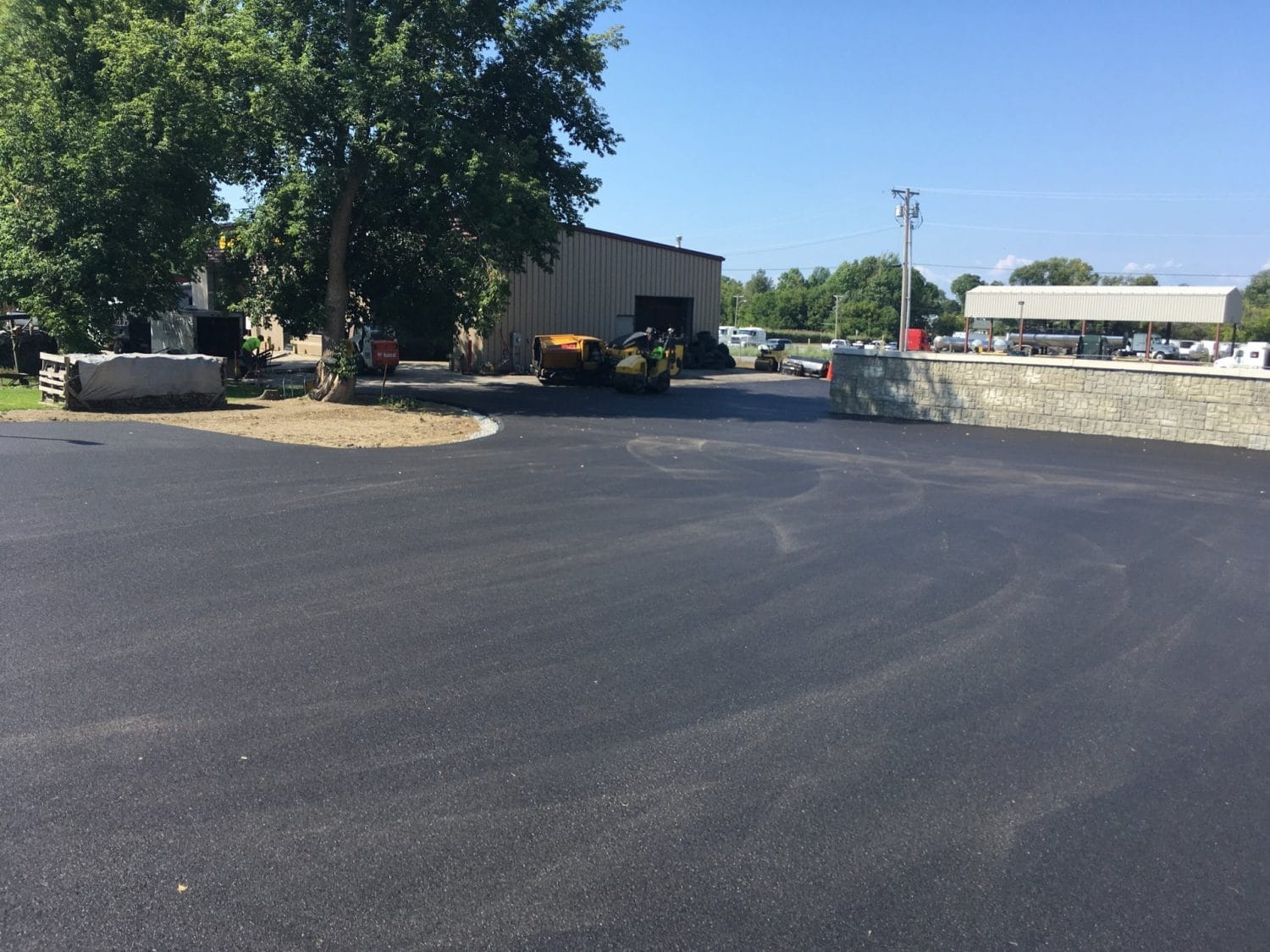
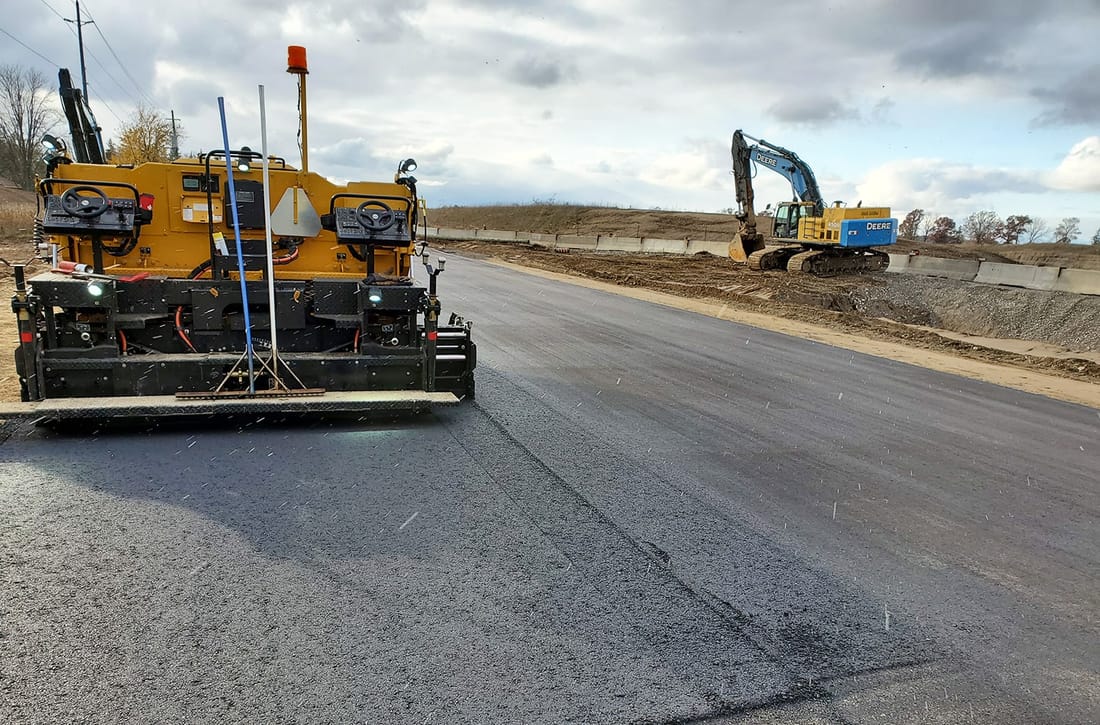
4) Asphalt paving: We install asphalt in one or more lifts. For heavier use roads and bus routes, we typically place a stronger base course followed by a finer surface course. Asphalt is delivered from local plants, kept at the proper temperature, and laid with a paver that maintains a consistent mat thickness. Rollers follow closely to achieve density before the mix cools.
5) Joints, tie‑ins, and cleanup: We pay close attention to joints where new asphalt meets existing roads, driveways, and intersections. These are sealed and compacted to avoid bumps and cracks. After paving, we sweep the surface, adjust manhole covers or valve boxes to the new grade, and prepare the road for striping or opening.
Material Choices for Boise Roads and What Affects Cost
Not every road in Boise needs the same asphalt design. Precision Asphalt Boise selects mixes and structures based on use, budget, and expected maintenance.
For local residential streets and private subdivision roads, a dense graded asphalt mix with moderate binder content usually provides a good balance of durability and cost. On industrial streets, heavy truck routes, or roads near distribution centers, we often recommend a thicker asphalt section or mixes with more stone and stiffer binder to resist rutting under repeated heavy loads.
Cost is influenced by several factors. Asphalt thickness and total square footage are major drivers, but they are not the whole story. Site access, the need for excavation or over‑excavation of poor soils, drainage improvements, and curb or sidewalk adjustments can be just as significant. Night work near busy corridors, coordination with rail crossings, or strict traffic control requirements can also affect price because of labor and equipment standby.
We are upfront about where you can save and where it does not make sense to cut corners. For example, reducing base thickness in Boise’s weaker subgrade areas can look good on paper but usually shows up later as cracking or settlement. On the other hand, using a single lift overlay instead of full reconstruction on a structurally sound road can stretch a municipal or HOA budget a lot further.
Local Regulations, Permitting, and Inspections in Boise
Road, street, and municipal paving in Boise almost always involves some level of review or permitting. Precision Asphalt Boise routinely works within these frameworks so your project does not get stalled by paperwork.
If your road connects to a public street or lies within ACHD jurisdiction, you may need approach permits, construction permits, or right‑of‑way occupancy approvals. We coordinate our schedules and traffic control plans with ACHD standards and are accustomed to having their inspectors onsite for proof‑rolls, base checks, and paving operations.
Inside city limits, projects may trigger stormwater management requirements. That can mean adding or adjusting catch basins, inlets, or swales alongside the new pavement. We work with your engineer to ensure what we build matches the approved plans and any city stormwater details.
For private rural lanes and access roads that do not fall under formal roadway standards, we still follow practical guidelines that local fire departments and delivery services expect, such as minimum width, turnaround provisions when needed, and adequate base strength. This helps avoid problems later when a lender, insurer, or fire marshal evaluates access to the property.
Common Boise Road Problems and How We Address Them
Roads in and around Boise tend to show a few familiar issues: edge cracking on narrow rural lanes, alligator cracking where the base is weak, rutting at bus stops or intersections, and potholes that reopen after winter. Each issue has a different cause, and we match the fix to the problem instead of applying the same patch everywhere.
For edge failures, the cause is often traffic running off the side of a road that has no shoulder. We address this by rebuilding the edge, adding base support, and sometimes widening slightly or adding an aggregate shoulder so vehicles are not breaking the asphalt edge every time they pull off.
Alligator cracking usually points to base or subgrade problems. On those sections, a thin overlay is a short‑term bandage. We typically recommend milling or removing the failed area, rebuilding the base, and then repaving so the problem does not simply reflect through again.
Where rutting occurs from repeated heavy loads, we may specify a stiffer asphalt mix on the surface or add thickness in the wheel paths. On older chip‑sealed or oil‑mat roads, we can stabilize the surface and then cap it with a structural asphalt layer that stands up better to Boise traffic and seasonal temperature swings.
For owners and agencies dealing with tight budgets, we prioritize repairs based on risk and use, focusing first on sections that impact safety or main access routes, then stretching remaining funds with targeted patching and overlays.
What Boise Clients Can Expect When Working With Precision Asphalt Boise
Road and street work affects people’s daily routines, so we place a strong emphasis on communication with nearby residents, businesses, and agency staff. Before we mobilize, we help you prepare notices that explain where work will occur, when driveways or intersections will be restricted, and how long the disruption will last.
During construction, our foreman remains on site to coordinate with inspectors, property managers, school transportation staff, or on‑site facility teams. When shifts in weather or plant production force scheduling changes, we let you know quickly so you can update your stakeholders. In Boise’s variable spring and fall conditions, that flexibility prevents rushed work that could shorten pavement life.
We also talk honestly about maintenance planning. A properly built Boise road still benefits from periodic crack sealing, localized patching, and eventually a surface overlay. We outline a basic maintenance timeline tailored to the structure we built and the traffic you expect, so you can budget years ahead instead of reacting to sudden failures.
From a short private road that must handle propane trucks and delivery vans to a multi‑phase subdivision or municipal collector street, Precision Asphalt Boise treats each paving project as part of the community fabric. The goal is the same: a smooth, durable road that makes everyday travel in and around Boise simpler and safer for years to come.